
A graphic t-shirt is one of the most personal items in anyone’s wardrobe. The images, words, and art we choose to print on our bodies say something about who we are. But not all graphic tees are created equal — and the difference between a quality tee and a cheap one comes down to a few specific, knowable factors. Here is everything you need to know.
Fabric: The Foundation of Everything
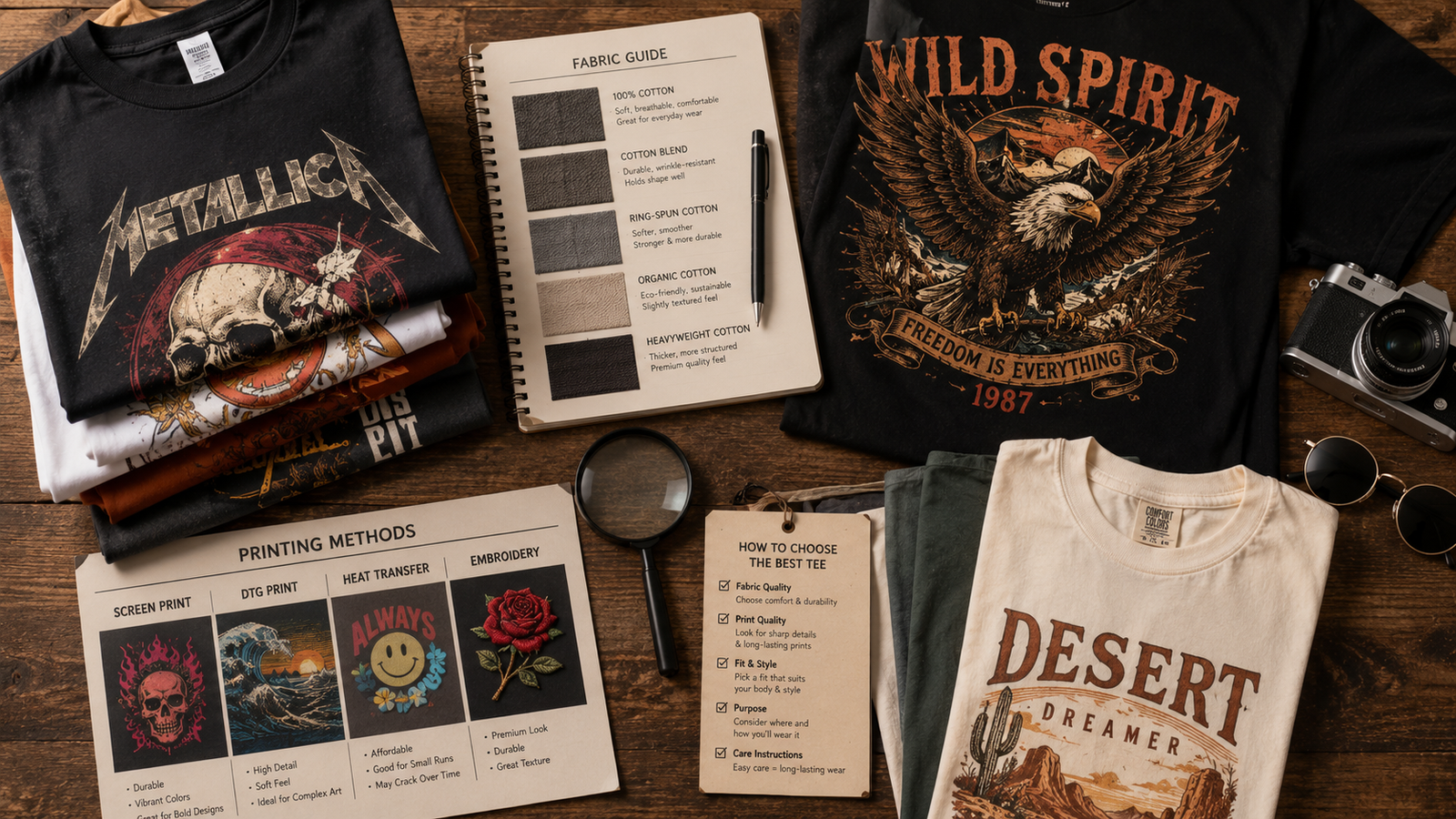
The fabric determines how the tee feels, drapes, and ages. For graphic tees, 100% combed ringspun cotton is the gold standard. Here is why: combed cotton removes short fibres and impurities before spinning, resulting in a smoother, stronger yarn. Ringspun cotton is spun by continually twisting and thinning the cotton fibres, producing a finer, softer, and more durable thread. The combination of both processes produces a fabric that is noticeably softer than standard cotton, holds its shape better, and takes print more evenly.
Understanding GSM: The Fabric Weight
GSM stands for grams per square metre — a direct measure of fabric weight and density. For graphic tees, the sweet spot is typically 160–200 GSM:
140–160 GSM: Lightweight, slightly sheer, prone to losing shape. Suitable for warm climates but not ideal for bold graphics as the fabric is less stable.
160–180 GSM: The most popular range for fashion graphic tees — substantial enough to drape well and hold print, light enough for year-round wear. Our standard Zivanno tees are 180 GSM.
190–220 GSM: Heavyweight tees with a premium, structured feel. Excellent for bold all-over prints and oversized cuts. Our Abstract Graffiti Art Tee uses 210 GSM for exactly this reason.
220 GSM+: Very heavyweight — more sweatshirt territory. Less common for graphic tees.
Print Methods: Screen Printing vs DTG
Screen printing uses a mesh screen and squeegee to push ink through a stencil onto the fabric, one colour at a time. It produces extremely vivid, opaque colours with a slightly raised texture. Screen printed graphics are highly durable and washfast — the ink bonds deeply into the fabric fibres. The limitation is that each colour requires a separate screen, making it more economical for large runs of the same design.
DTG (Direct-to-Garment) printing uses a modified inkjet printer to spray water-based ink directly onto the fabric. It can reproduce photographic detail, gradients, and thousands of colours in a single pass — things screen printing struggles with. Modern DTG produces excellent results on pre-treated 100% cotton and is ideal for intricate, multi-colour designs with high detail. Our Minimal Wave and Botanical Line Art tees use water-based screen printing; our complex graphic designs use DTG.
Fit Terminology: What Relaxed, Slim, and Oversized Actually Mean
Relaxed/regular fit: Straight cut from shoulder to hem with room through the chest and waist. Unisex in profile. The most versatile cut across body types.
Slim fit: Tapered through the waist and chest. Follows the body’s contours more closely. Works well for layering under jackets.
Oversized: Extended shoulder seams, dropped armholes, wider body. The dominant streetwear silhouette. Typically size down by one for an intentional oversized look, or wear your true size for maximum volume.
How to Wash Graphic Tees to Preserve the Print
Heat is the enemy of printed graphics. Always wash graphic tees inside out in cold water (30°C maximum). Avoid tumble drying where possible — hang or lay flat to dry. Never iron directly over a print; if ironing is needed, use a pressing cloth or iron inside out. Follow these rules and a quality graphic tee will hold its print beautifully for years.
The Bundle Advantage at Zivanno
Building a graphic tee wardrobe is most economical when done in multiples. Our 3-pack bundle at 200 kr and 5-pack bundle at 400 kr let you build across designs, colours, and occasions for significantly less than individual pricing. With four colour options — white, black, sand, and slate grey — and four adult sizes (S–XL), the combinations are genuinely endless.